
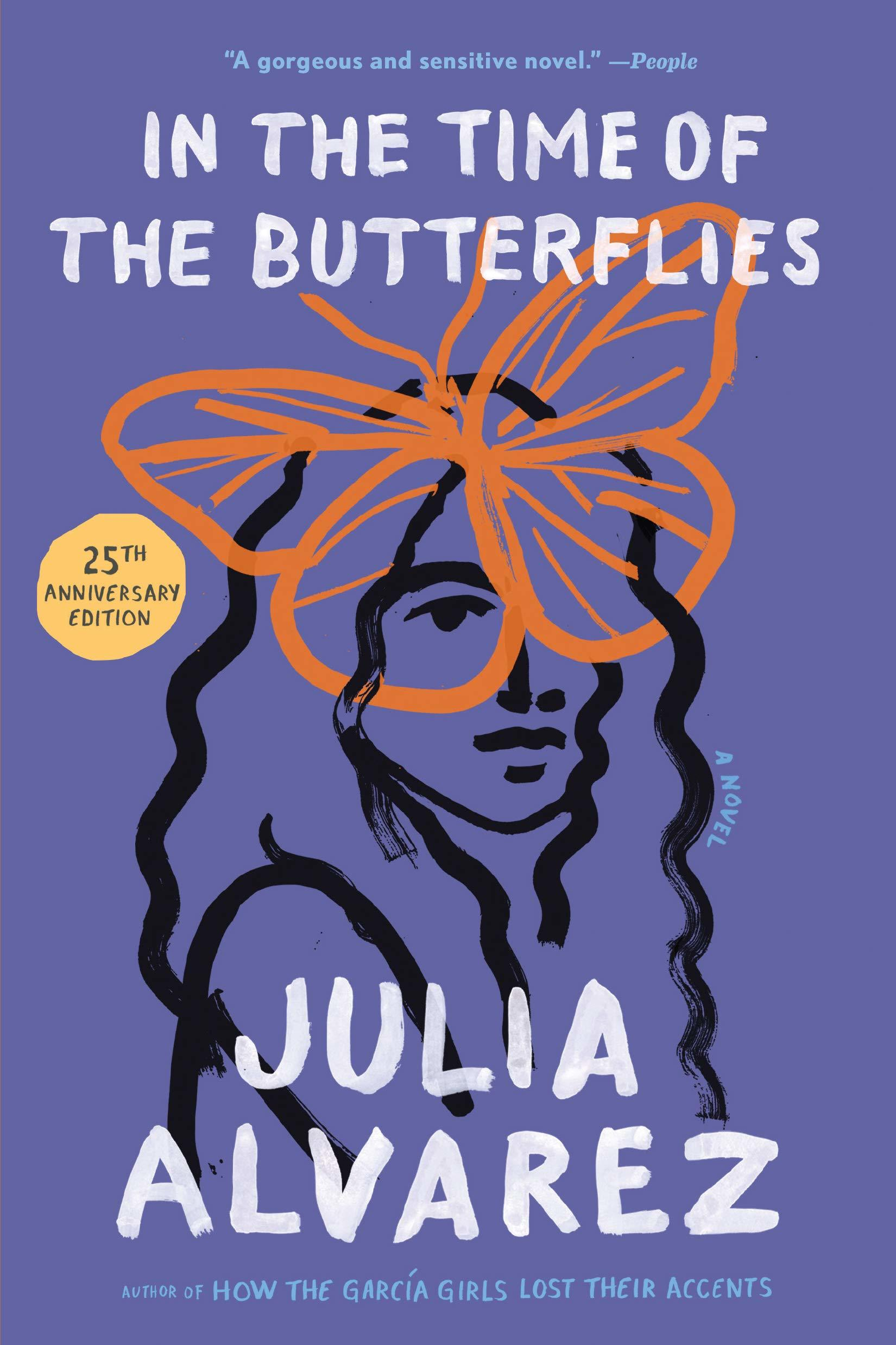
In the Time of the Butterflies opens on November 25, 1960, when three sisters are found near their wrecked Jeep at the bottom of a cliff on the north coast of the Dominican Republic. The official newspaper calls it an accident. It does not mention that a fourth sister survived, nor that all four were among the leading opponents of General Rafael Trujillo's dictatorship. In this novel, the voices of all four sisters, Minerva, Patria, María Teresa, and the survivor Dedé, speak across the decades to tell their own stories, from secret crushes to gunrunning, and to describe the everyday horror of life under Trujillo's rule.
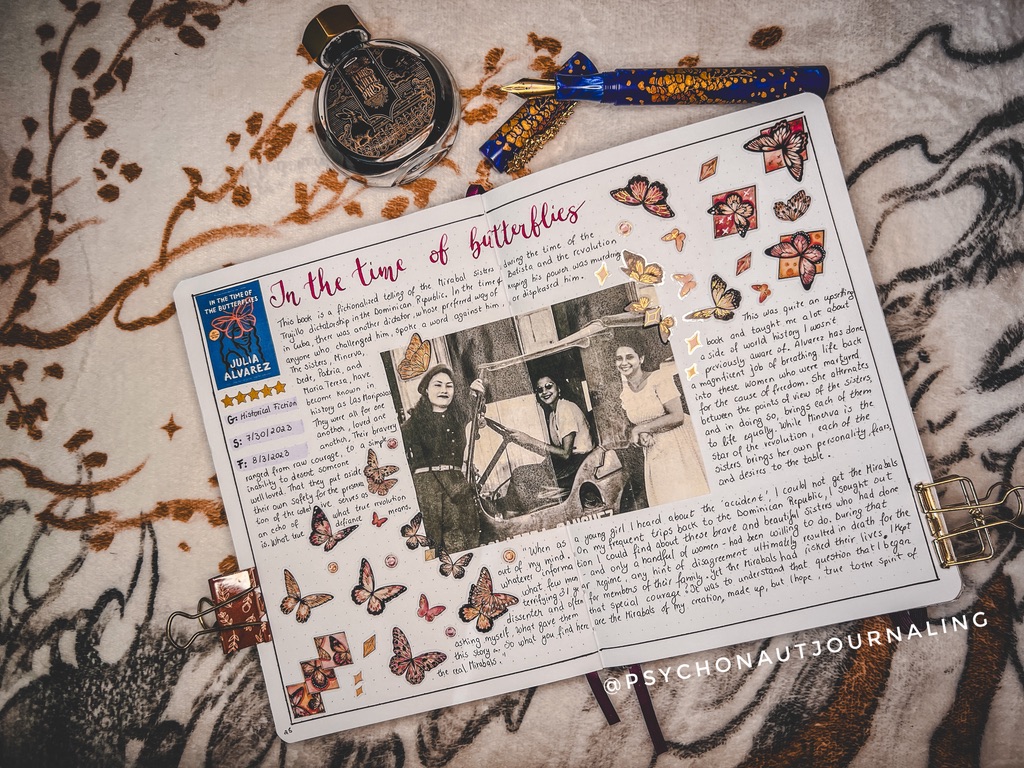
My Review
“I believe in the power of stories to change the world.” Julia Alvarez writes this at the end of the novel, and by the time you reach those words, you already feel the truth of them in your bones.
In the Time of the Butterflies tells the story of the four Mirabal sisters: Minerva, fierce and politically brilliant; Patria, whose faith eventually yields to a fiercer conviction; María Teresa, whose diaries chronicle both her allegiance and her anguish; and Dedé, the one who survives, who must carry the weight of having lived when her sisters did not. Three of them were murdered by Trujillo’s regime on November 25, 1960, a date the United Nations would later designate the International Day for the Elimination of Violence Against Women. This is the story of how they got there.
Alvarez structures the novel in alternating voices, and each sister comes fully and distinctly alive. What she does with particular skill is give us the before: the girlhoods, the crushes, the faith, the small domestic rebellions that preceded the larger ones. By the time the danger closes in, we know these women not as martyrs but as people, which makes what comes unbearably real. María Teresa’s diary entries are especially devastating, tracing a young woman’s dawning understanding of what her choices will cost her with a clarity and honesty that stopped me in my tracks more than once.
This is also, quietly, a very personal book. Alvarez’s own family fled the Dominican Republic just months before the sisters were killed. Her father had been part of the same underground. She is writing from the edge of a history that nearly claimed her too, and that proximity gives the prose a particular weight.
I knew almost nothing about the Trujillo dictatorship before picking this up. I could not put it down and have been thinking about it ever since. Vivan las mariposas. Five stars.