
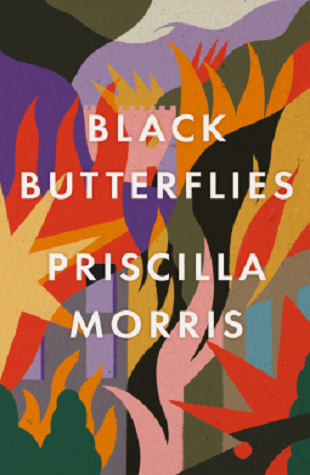
ABlack Butterflies tells the story of Zora Kočović, a 55-year-old landscape painter and teacher, during the first ten months of the Siege of Sarajevo in 1992. Separated from her husband and mother when violence breaks out, she must face brutal shelling and blockade alone, finding unexpected love, deep community, and a fierce determination to keep making art even as the city crumbles around her. The title comes from the charred fragments of books and paintings that floated over Sarajevo for days after the National Library was burned.
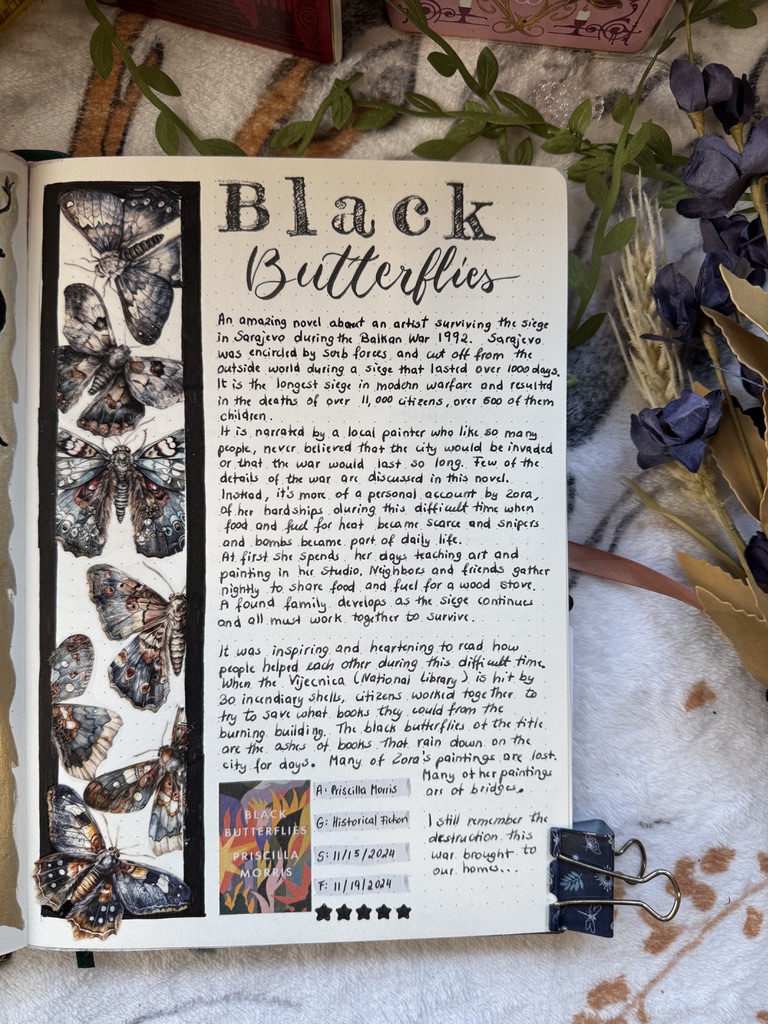
My Review
War does not come suddenly in this novel. It creeps. The barricades go up each night and the residents push them aside each morning, as if by collective insistence they can refuse what is coming. And then one day they cannot.
Black Butterflies follows Zora, a painter and professor at Sarajevo’s Academy of Fine Arts, through the first year of the siege. A Serb whose family has called this multicultural city home for generations, she is as bewildered by the nationalist violence as her Muslim and Croat neighbours. She sends her husband and elderly mother to England, certain the hostilities will last only weeks. They do not. The doors close around her, and she is left alone with her canvases, her students, and the neighbours who become her lifeline.
There’s a new category here now: the good Serb, i.e. the Serb who is not a nationalist, who does not want to divide the country, to ethnically cleanse. I’m constantly having to reassure people that I’m a good Serb. It’s driving me insane.
Priscilla Morris writes the slow collapse of daily life with devastating precision. No electricity. No heat. No water. Mortar fire and sniper bullets overhead. Food shortages. And through all of it, Zora paints. Her art is not an escape from the siege so much as a way of insisting on the existence of the city it is destroying, those bridges and landscapes she has loved her whole life, rendered again and again as everything around them burns.
We’re all refugees now, Zora writes to Franjo. We spend our days waiting for water, for bread, for humanitarian handouts: beggars in our own city.
There is a scene involving snow that I have not been able to shake. The way it briefly coats the rubble in white, offering a few hours of something close to peace, and then melts into brown slush, leaving Zora with an emptiness deeper than before. It is a perfect encapsulation of what this book does throughout: beauty offered not as comfort but as a reminder of what has been taken.
The title, too, carries its full weight. The black butterflies are the charred pages of books and artworks that floated over Sarajevo for days after the National Library burned. Read the author’s note. Know that this is drawn from real lives, including Morris’s own family.