
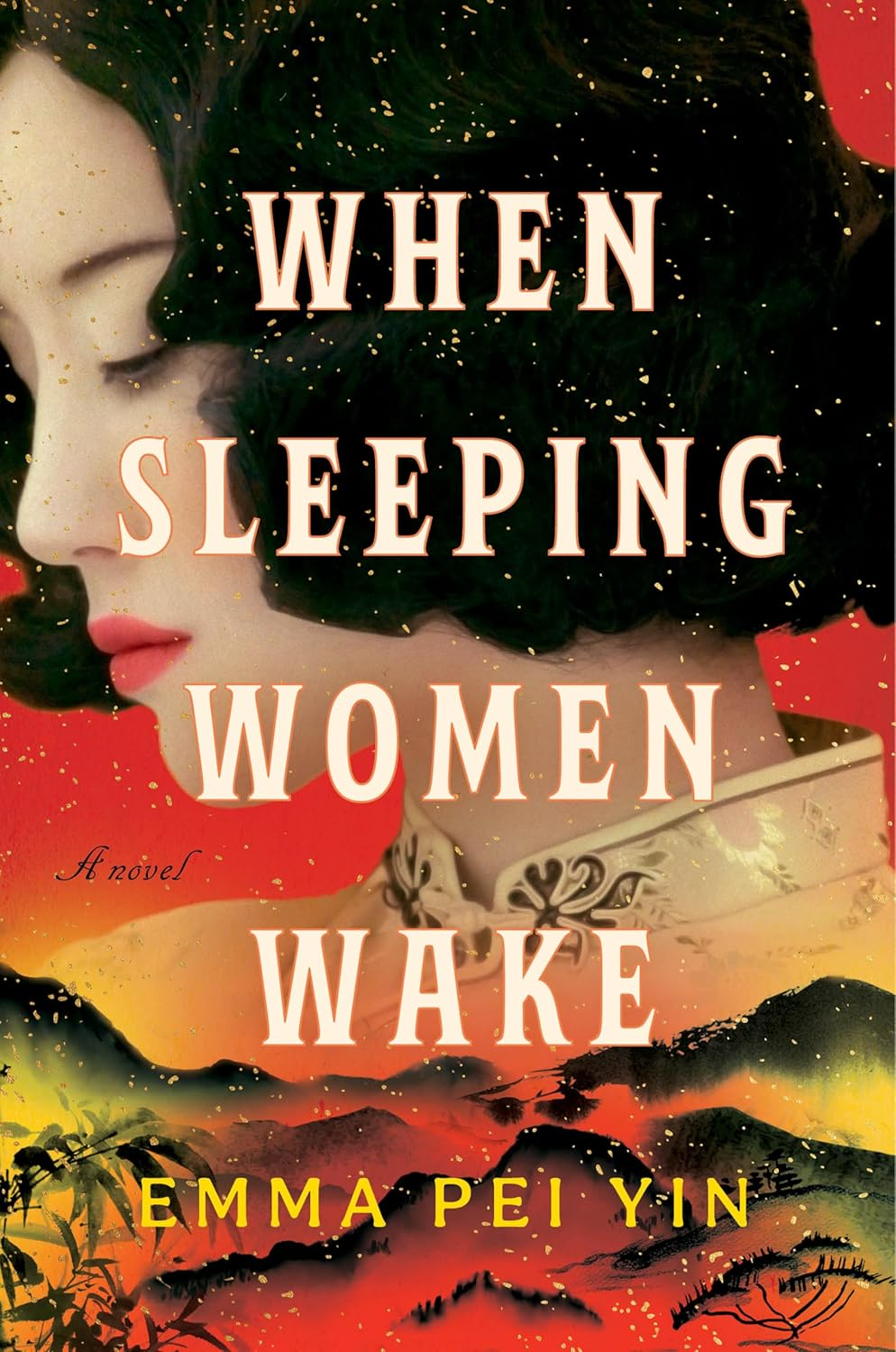
When Sleeping Women Wake follows three women, a mother, her daughter, and their maid, each forced onto a journey of survival during the Japanese occupation of Hong Kong in World War II. Separated by the ravages of war, Mingzhu, Qiang, and Biyu must each navigate their own fate amid escalating danger, holding onto the hope that they will find their way back to one another.

My Review
Thank you Ballantine Books & Netgalley for the ARC!
“When sleeping women wake, mountains move”
This is a haunting, beautifully told novel that swept me into a chapter of history I knew shockingly little about: the Japanese occupation of Hong Kong during World War II. Despite being familiar with many WWII narratives, this one felt wholly new and disturbingly relevant, especially in light of Hong Kong’s more recent political struggles.
The story follows three women Mingzhu, born into Qing dynasty privilege and trapped in a gilded cage of a marriage; her fierce and spirited daughter, Qiang; and Biyu, their loyal servant and Qiang’s closest confidante. Through their alternating perspectives, the book explores not just the horrors of war but the quieter, insidious forms of violence that preceded it inside the Tang family estate.
The first half of the book brims with tension and melancholy: the cold luxury of the Tang household, the icy rivalry between Mingzhu and her husband’s concubine, and the tender, forbidden romance between Mingzhu and her daughter’s English tutor, bound by poetry, brisket lunches, and unsent letters. And just when you think you understand the worst of what these women endure, the war arrives and reshapes everything with devastating force.
This is a novel that lingers. It’s heartbreaking, yes but also luminous, defiant, and full of quiet hope. A must-read for fans of historical fiction that doesn’t shy away from emotional complexity or moral grayness.