
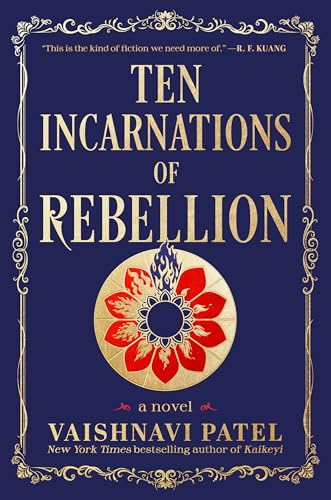
Ten Incarnations of Rebellion imagines an alternate 1960s India that was never liberated from British colonial rule. Kalki Divekar grows up in Kingston, a city the British built on the ashes of Bombay, driven by the memory of her executed father and determined to destroy the empire from the inside out. Told across ten moments in Kalki's life that mirror the Dashavatara, the ten avatars of Vishnu, it is a sweeping story of empowerment, friendship, sacrifice, and the true cost of freedom.
My Review
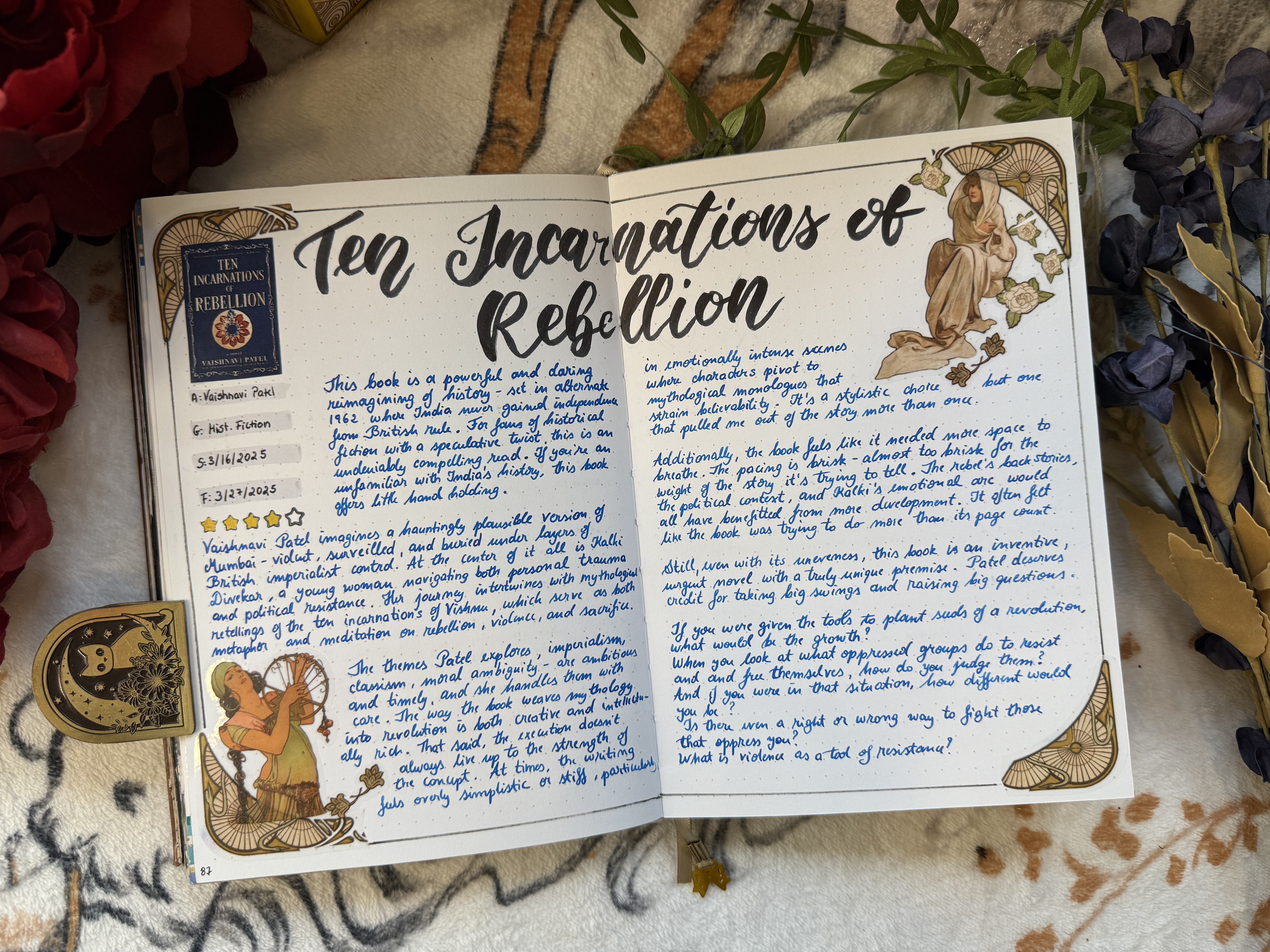
Ten Incarnations of Rebellion is a powerful and daring reimagining of history—set in an alternate 1962 where India never gained independence from British rule. For fans of historical fiction with a speculative twist, this is an undeniably compelling read. But a word of caution: if you’re unfamiliar with India’s history, this book offers little hand-holding. In this world, history has been quite literally rewritten.
Vaishnavi Patel imagines a hauntingly plausible version of Mumbai—violent, surveilled, and buried under layers of British imperialist control. At the center of it all is Kalki Divekar, a young woman navigating both personal trauma and political resistance. Her journey intertwines with mythological retellings of the ten incarnations of Vishnu, which serve as both metaphor and meditation on rebellion, violence, and sacrifice.
The themes Patel explores—imperialism, classism, moral ambiguity—are ambitious and timely, and she handles them with care. The way the book weaves mythology into revolution is both creative and intellectually rich. That said, the execution doesn’t always live up to the strength of the concept. At times, the writing feels overly simplistic or stiff, particularly in emotionally intense scenes where characters pivot to mythological monologues that strain believability. It’s a stylistic choice, but one that pulled me out of the story more than once.
Additionally, the book feels like it needed more space to breathe. The pacing is brisk—almost too brisk for the weight of the story it’s trying to tell. The rebels’ backstories, the political context, and Kalki’s emotional arc would all have benefitted from more development. It often felt like the book was trying to do more than its page count allowed.
Still, even with its unevenness, Ten Incarnations of Rebellion is an inventive, urgent novel with a truly unique premise. Patel deserves credit for taking big swings and raising big questions, even if every moment doesn’t land perfectly. I’d absolutely recommend it to readers who enjoy mythologically grounded fiction, alternate histories, or bold political storytelling that pushes the boundaries of the genre.