
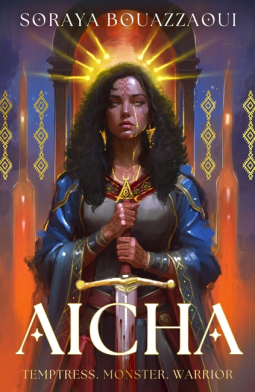
Aicha is a fierce, myth-infused historical fantasy that follows a young woman born into rebellion as she fights against colonial rule in Morocco. Aicha, the daughter of a freedom fighter, is driven by grief and rage after witnessing the suffering of her people under Portuguese occupation. As war escalates, she must confront both the external forces oppressing her homeland and the dark, supernatural power growing within her—one that could either liberate her people or destroy her completely.
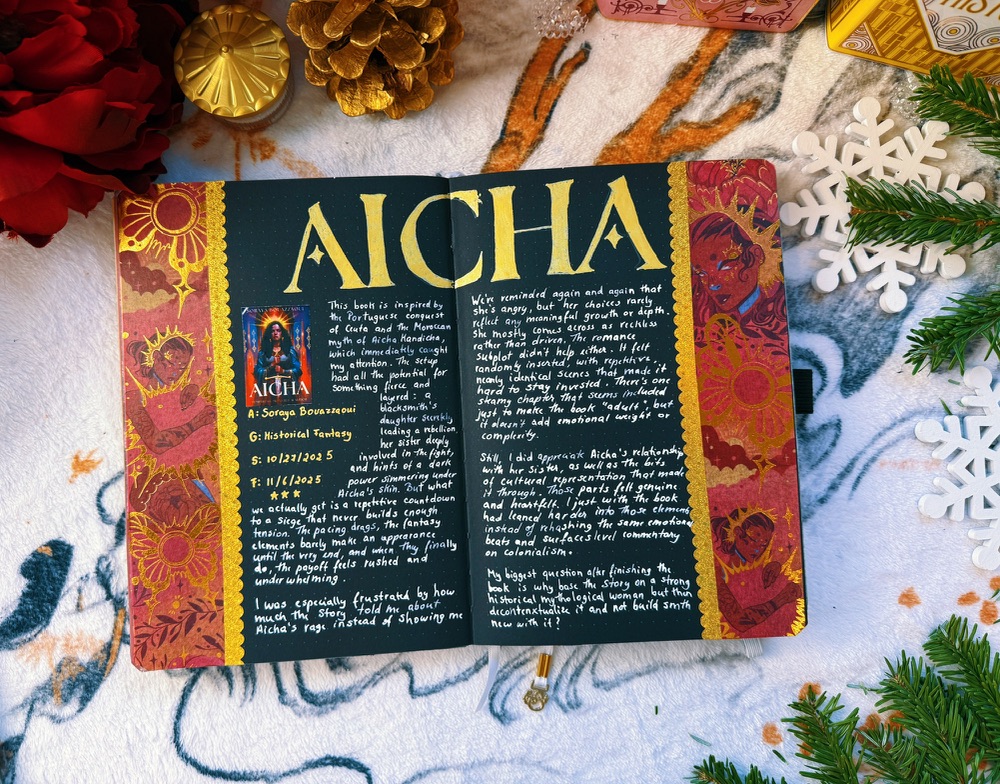
My Review
For a book with such a striking cover and an incredible premise, Aicha turned out to be a real disappointment for me. It’s inspired by the Portuguese conquest of Ceuta and the Moroccan myth of Aicha Kandicha, which immediately caught my attention. The setup had all the potential for something fierce and layered: a blacksmith’s daughter secretly leading a rebellion, her sister deeply involved in the fight, and hints of a dark power simmering under Aicha’s skin. But what we actually get is a repetitive countdown to a siege that never builds enough tension. The pacing drags, the fantasy elements barely make an appearance until the very end, and when they finally do, the payoff feels rushed and underwhelming.
I was especially frustrated by how much the story told me about Aicha’s rage instead of showing it. We’re reminded again and again that she’s angry, but her choices rarely reflect any meaningful growth or depth. She mostly comes across as reckless rather than driven. The romance subplot didn’t help either. It felt randomly inserted, with repetitive, nearly identical scenes that made it hard to stay invested. There’s one steamy chapter that seems included just to make the book “adult,” but it doesn’t add emotional weight or complexity.
Still, I did appreciate the relationship between Aicha and her sister, as well as the bits of cultural representation that made it through. Those parts felt genuine and heartfelt. I just wish the book had leaned harder into those elements instead of rehashing the same emotional beats and surface-level commentary on colonialism. Three stars for ambition and a few strong moments, but I can’t help feeling let down by what could have been something powerful.