
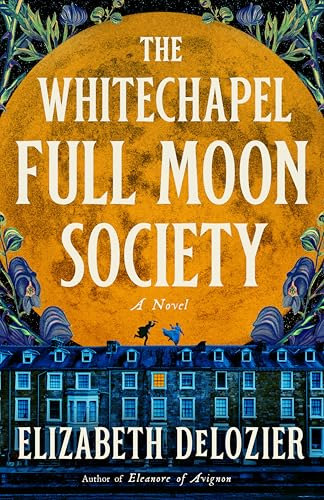
Set in Victorian London during Jack the Ripper’s reign, Caroline Foster takes a maid’s post at the opulent, secretive Whitechapel Full Moon Society while searching for her missing brother. Bound by odd rules—ask no questions, avoid the barred second‑floor room, and stay indoors on full moons—she soon uncovers links between the Society and a string of murders that pull her into a web of curses, family secrets, and monstrous truths. Taut, atmospheric, and chilling, this is a gripping supernatural reimagining of the Ripper case.
My Review
Thank you so much to Dutton and NetGalley for the ARC!
The setup hooked me right away: Caroline Foster sells everything she owns after her father’s death and heads to late 1880s London to reunite with her brother, only to find him missing in the same Whitechapel stalked by Jack the Ripper. Desperate for answers, she takes a position as a maid at the Whitechapel Full Moon Society, a crumbling exterior hiding rooms that rival any elite gentlemen’s club. The rules she’s given are ominous: don’t ask personal questions, avoid the iron-barred room upstairs, and lock yourself in from sunup to sundown on the full moon. Add in letters supposedly written by the Ripper scattered throughout the book, and it has all the ingredients for something dark and memorable.
I actually liked the mood quite a bit. The mystery creeps rather than lunges, with strange hints dropped here and there instead of big, flashy scares. At times it felt like one of those hazy folk horror films where you’re never fully sure whether there’s a real monster in the shadows or just paranoia feeding on grief and violence. The supernatural angle could have been fantastic, especially woven into the brutality of Whitechapel’s history, and I appreciated the ambition of blending historical crime with ancient curses and family secrets.
That said, the execution didn’t quite land for me. The story tries to juggle historical fiction, murder mystery, and fantasy all at once, and none of them get enough room to breathe. The supernatural twist in particular arrives so abruptly that I was left wanting a clearer explanation of how and why any of it worked. On top of that, the characters felt thin; I kept mixing up names and struggling to remember why certain people mattered. The first half drags with chores and club politics while the central mystery stalls, and Caroline often seems oddly passive about finding her brother. When she isn’t urgently searching for him, it’s hard to stay fully invested. There’s a compelling novel buried in here, but it needed sharper focus and stronger character work to really shine.