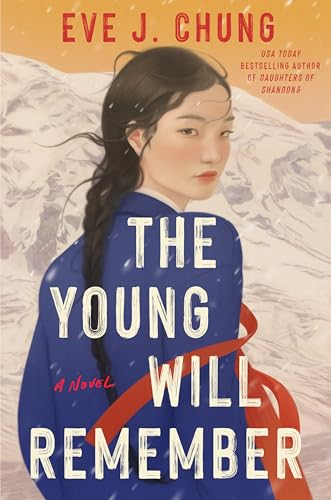
When Chinese American journalist Ellie Chang's military plane is shot down over North Korea in the brutal winter of 1950, she expects to die — until a Korean woman claims her as the missing daughter she's been searching for since the last war. Bound together by an impossible choice, the two must journey south through enemy territory to survive. A sweeping, moving novel about the Forgotten War and the women who endured it, from the bestselling author of Daughters of Shandong.
My Review
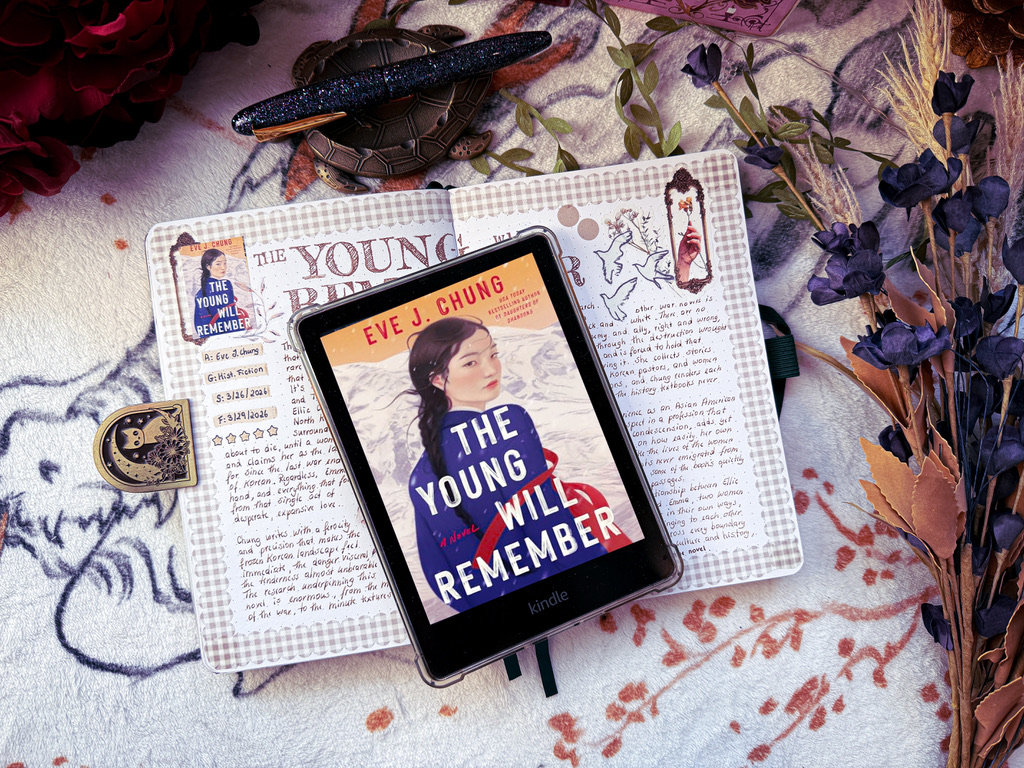
Thank you so much to Berkley Pub for the ARC!
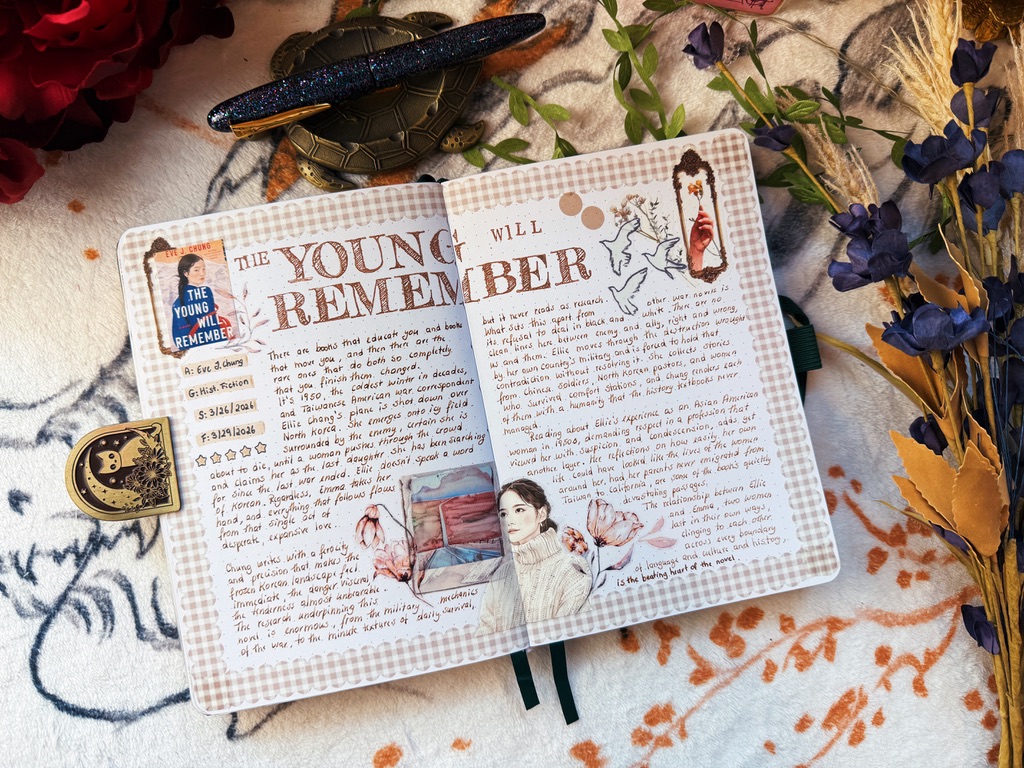
There are books that educate you and books that move you, and then there are the rare ones that do both so completely that you finish them changed. The Young Will Remember is that kind of book.
It is 1950, the coldest winter in decades, and Taiwanese American war correspondent Ellie Chang’s plane is shot down over North Korea. She emerges onto an icy field surrounded by the enemy, certain she is about to die, until a woman pushes through the crowd and claims her as the lost daughter she has been searching for since the last war ended. Ellie doesn’t speak a word of Korean. None of that matters. Emma takes her hand, and everything that follows flows from that single act of desperate, expansive love.
Eve J. Chung writes with a ferocity and precision that makes the frozen Korean landscape feel immediate, the danger visceral, the tenderness almost unbearable. The research underpinning this novel is enormous, from the military mechanics of the war to the minute textures of daily survival, but it never reads as research. It reads as lived experience on every page.
What sets this apart from other war novels is its refusal to deal in black and white. There are no clean lines here between enemy and ally, right and wrong, us and them. Ellie moves through the destruction wrought by her own country’s military and is forced to hold that contradiction without resolving it. She collects stories from Chinese soldiers, North Korean pastors, and women who survived comfort stations, and Chung renders each of them with a humanity that the history textbooks never managed.
We were trying to fight Mao, but he wasn’t mortal anymore. He was an ideology, and he thrived, not simply on Marxism or any other type of Communism, but on the trauma of colonialism.
Reading about Ellie’s experience as an Asian American woman in the 1950s, demanding respect in a profession that viewed her with suspicion and condescension, adds yet another layer. Her reflections on how easily her own life could have looked like the lives of the women around her, had her parents never emigrated from Taiwan to California, are some of the most quietly devastating passages in the book.
A needle mends, while a pen exposes, and the mere existence of a woman who wields the latter is a threat.
The relationship between Ellie and Emma, two women lost in their own ways, clinging to each other across every boundary of language and culture and history, is the beating heart of the entire novel. I was not prepared for how much I would love them both. And that ending was pure perfection!
History was a chain, and too often it was wrapped around women’s necks. In every country, there were monuments dedicated to men who waged wars. How many had anything to honor the women who suffered through them, or survived them?
Lighting a torch can be frightening, and often it is lonely, but when that fire catches, it is brilliant.