
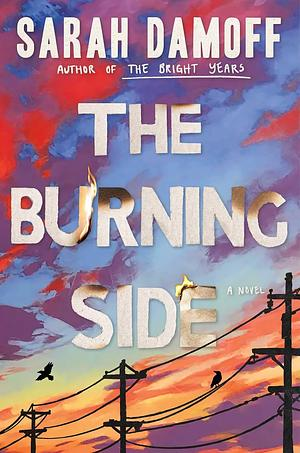
After their house burns down the same night Leo asks for a divorce, April and their two young children retreat to her childhood home in Dallas, where her parents offer both refuge and complication. Told through alternating perspectives and flashbacks, The Burning Side unravels the resentments, guilt, and buried tenderness of a marriage coming apart, asking whether love is enough to rebuild what's already been lost.
My Review
Thank you so much to Simon Books for the ARC!
The house burns down the same night Leo asks for a divorce. That’s the kind of opening gut punch that sets the tone for Sarah Damoff’s second novel, and she doesn’t let up from there.
There are a hundred paths through the world that are easier than loving.
Damoff writes family drama the way the best writers do: slowly, carefully, with enough warmth and humor threaded through the heartbreak that you never feel like you’re being punished for caring. This is a character-driven novel in the fullest sense. Plot is almost beside the point. What matters here is the emotional archaeology.
Life is a series of wild unknowns, and the past will always leave marks.
The story unfolds through alternating perspectives: April, who carries the weight of motherhood and self-blame in equal measure; Leo, shaped by a lonely childhood with relatives who never quite wanted him; and Deb, April’s mother, quietly navigating her husband’s Alzheimer’s diagnosis while also holding her daughter’s crumbling marriage together. The flashbacks to April and Leo’s early relationship are especially effective. Watching them fall in love knowing what’s coming is its own particular ache.
Alzheimer’s is a form of time travel, but time travel hurts. It always leaves someone behind.
What I appreciated most is that no one is let fully off the hook, but no one is flattened into a villain either. The characters are unlikeable at times, and that’s the point. Real people are. The fire works beautifully as a structural metaphor without the book ever making a fuss about it.
Deb’s storyline gave me the most pause. Grief about aging and memory sitting alongside marital grief is a specific kind of sadness, and Damoff handles it with real care.
We can only return to a place, not a time