
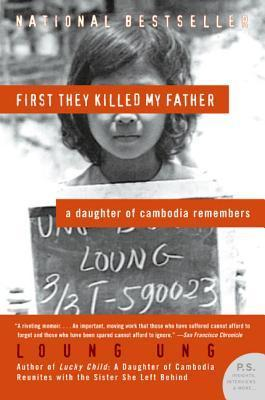
In April 1975, the Khmer Rouge marched into Phnom Penh and changed everything. Told through the eyes of five-year-old Loung Ung, this memoir traces her family's desperate flight from the city, their years hiding under the regime, and the losses that accumulated along the way. It is a child's account of survival, and one of the most necessary books written about the Cambodian genocide.
My Review
What do you even say about a book like this?
I’ve been sitting with this book for a while now, trying to figure out how to write about it, and I’m still not entirely sure I can.
Loung Ung was five years old when the Khmer Rouge forced her family out of their home in Phnom Penh. Five. And she writes this memoir through the eyes of that child… not through the wisdom of hindsight, not with political framing or historical distance, but from inside the confusion of a little girl who doesn’t fully understand why her world has collapsed. That choice is what makes this book so devastating. There’s no buffer. You’re not reading about the genocide; you’re inside it, at child-height, experiencing it as fragments of fear and hunger and love.
Her family was relatively well-off, which bought them small mercies at first: a car, possessions to trade for food, a brief reprieve from the worst of it. But the Khmer Rouge were patient and thorough, and those mercies didn’t hold. The family was separated. People died. And Loung, somewhere between five and nine years old, did things to survive that no child should ever have to do, things I still can’t fully process as an adult reading about them.
What stays with me is how the book handles love. In the middle of all that brutality, it’s the small gestures like a hand held, a meal shared, a sibling’s face remembered that feel like defiance. Resilience isn’t loud here. It’s quiet and stubborn and achingly human.
We in the Western world have a habit of looking away from atrocities, or worse, finding ways to make them abstract enough to be comfortable. This book refuses to let you do that. It is essential reading precisely because it is so hard. For anyone willing to sit with discomfort and bear witness, this one is not optional.