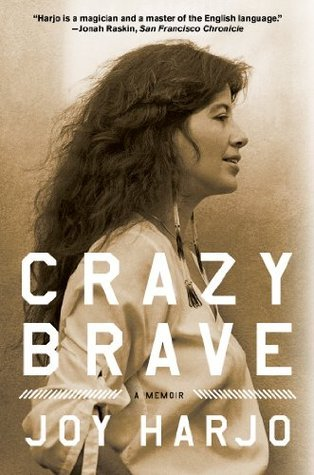
In Crazy Brave, Joy Harjo shares her journey from a childhood marked by poverty and trauma to becoming a celebrated poet and musician. Through vivid storytelling and lyrical prose, Harjo explores themes of identity, resilience, and the power of art to heal and transform. This memoir offers an intimate look at the life of a Native American artist who has overcome immense challenges to find her voice and share her story with the world.
My Review
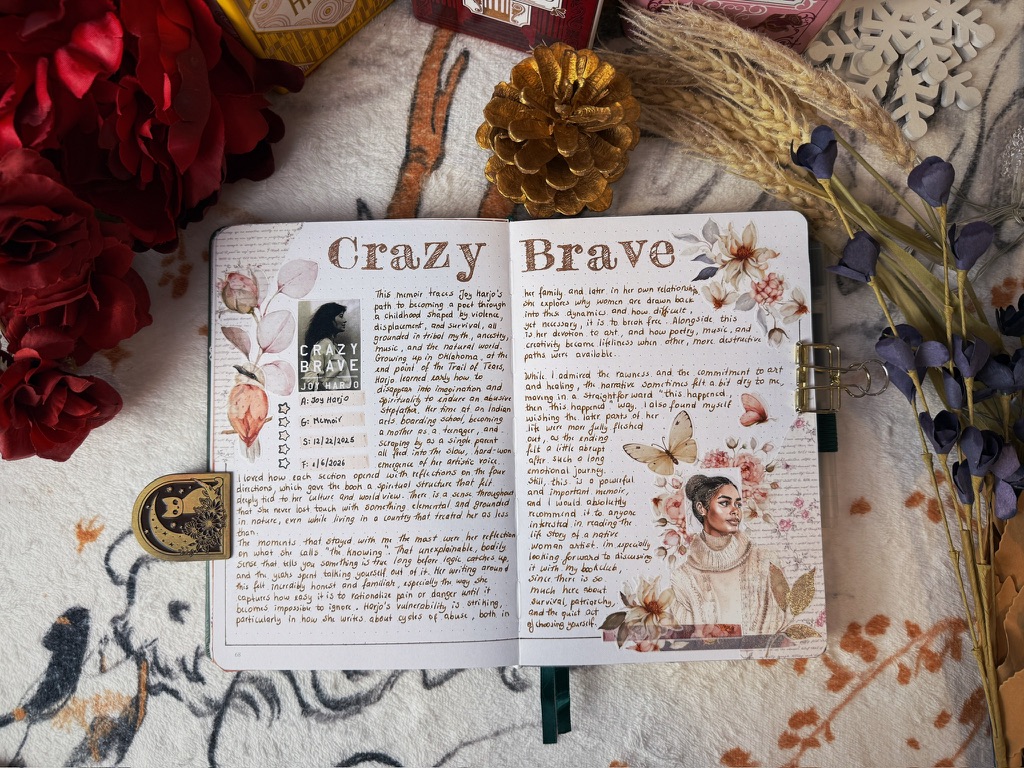
This memoir traces Joy Harjo’s path to becoming a poet through a childhood shaped by violence, displacement, and survival, all grounded in tribal myth, ancestry, music, and the natural world. Growing up in Oklahoma, at the end point of the Trail of Tears, Harjo learned early how to disappear into imagination and spirituality to endure an abusive stepfather. Her time at an Indian arts boarding school, becoming a mother as a teenager, and scraping by as a single parent all feed into the slow, hard-won emergence of her artistic voice. I loved how each section opened with reflections on the four directions, which gave the book a spiritual structure that felt deeply tied to her culture and worldview. There is a sense throughout that she never lost touch with something elemental and grounded in nature, even while living in a country that treated her as less than.
The moments that stayed with me most were her reflections on what she calls “the knowing.” That unexplainable, bodily sense that tells you something is true long before logic catches up, and the years spent talking yourself out of it. Her writing around this felt incredibly honest and familiar, especially the way she captures how easy it is to rationalize pain or danger until it becomes impossible to ignore. Harjo’s vulnerability is striking, particularly in how she writes about cycles of abuse, both in her family and later in her own relationships. She explores why women are drawn back into these dynamics and how difficult, yet necessary, it is to break free. Alongside this is her devotion to art, and how poetry, music, and creativity became lifelines when other, more destructive paths were available.
While I admired the rawness and the commitment to art and healing, the narrative sometimes felt a bit dry to me, moving in a straightforward “this happened, then this happened” way. I also found myself wishing the later parts of her life were more fully fleshed out, as the ending felt a little abrupt after such a long emotional journey. Still, this is a powerful and important memoir, and I would absolutely recommend it to anyone interested in reading the life story of a Native woman artist. I’m especially looking forward to discussing it with my book club, since there is so much here about survival, patriarchy, and the quiet, stubborn act of choosing yourself.