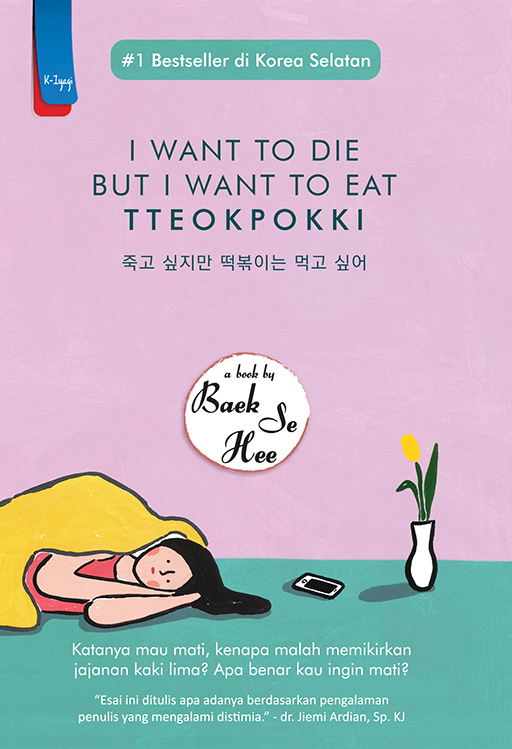
I Want to Die but I Want to Eat Tteokbokki is part memoir, part self-help, structured around twelve weeks of recorded therapy sessions between the author and her psychiatrist, interspersed with reflective personal essays. Candid and quietly funny, it traces one young woman's attempt to untangle the cycles of self-doubt, anxiety, and persistent low-grade depression that kept her from fully inhabiting her own life.
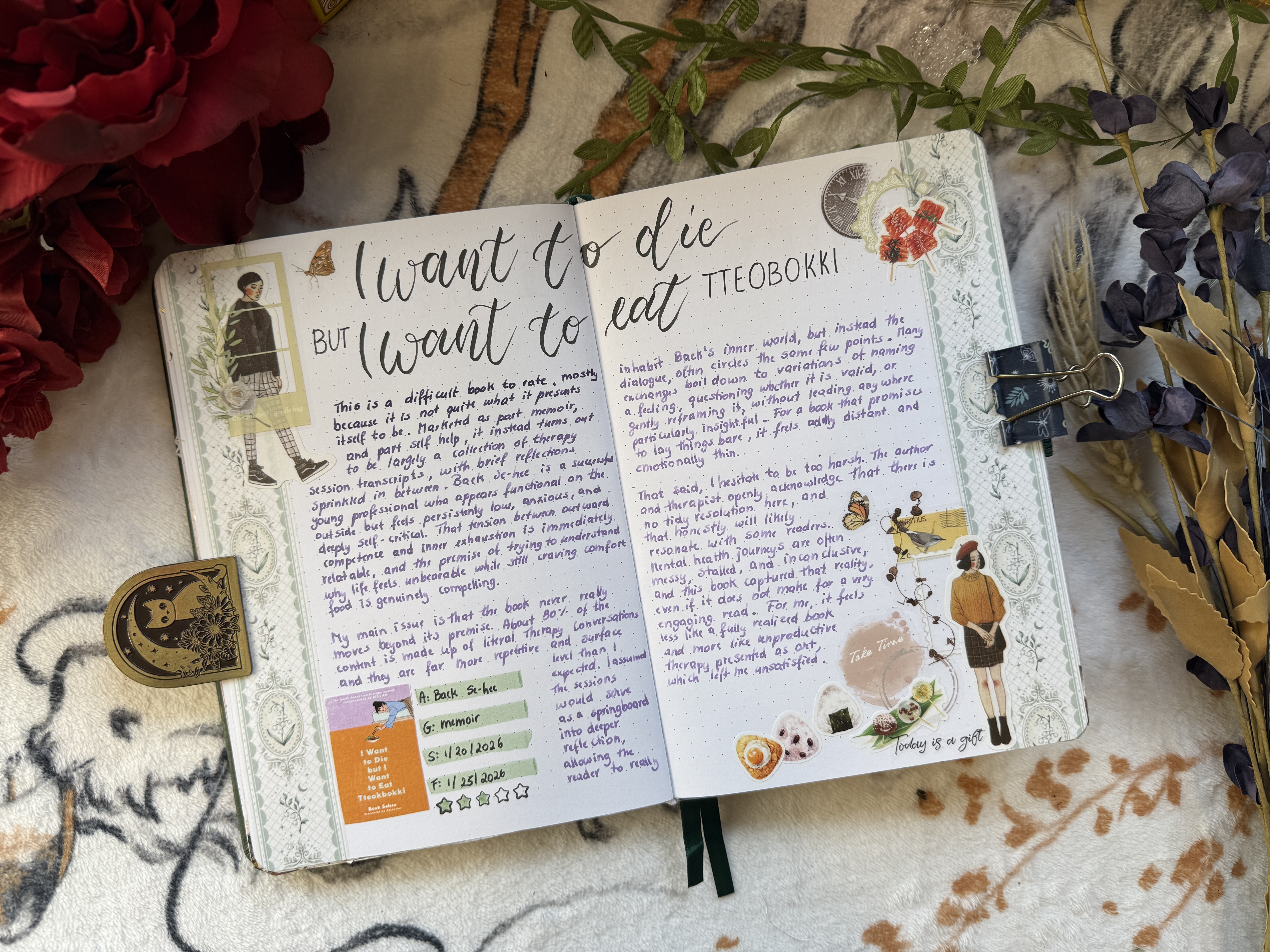
My Review
This is a difficult book to rate, mostly because it is not quite what it presents itself as. Marketed as part memoir and part self help, it instead turns out to be largely a collection of therapy session transcripts, with brief reflections sprinkled in between. Baek Se-hee is a successful young professional who appears functional on the outside but feels persistently low, anxious, and deeply self-critical. That tension between outward competence and inner exhaustion is immediately relatable, and the premise of trying to understand why life feels unbearable while still craving comfort food is genuinely compelling.
My main issue is that the book never really moves beyond its premise. About eighty percent of the content is made up of literal therapy conversations, and they are far more repetitive and surface-level than I expected. I assumed the sessions would serve as a springboard into deeper reflection, allowing the reader to really inhabit Baek’s inner world, but instead the dialogue often circles the same few points. Many exchanges boil down to variations of naming a feeling, questioning whether it is valid, or gently reframing it, without leading anywhere particularly insightful. For a book that promises to lay things bare, it feels oddly distant and emotionally thin.
That said, I hesitate to be too harsh. The author and therapist openly acknowledge that there is no tidy resolution here, and that honesty will likely resonate with some readers. Mental health journeys are often messy, stalled, and inconclusive, and this book captures that reality, even if it does not make for a very engaging read. For me, it felt less like a fully realized book and more like unproductive therapy presented as art, which left me unsatisfied. Still, I can see how someone earlier in their own process might find comfort in its candor, even if I wasn’t the right audience for it.≈≈