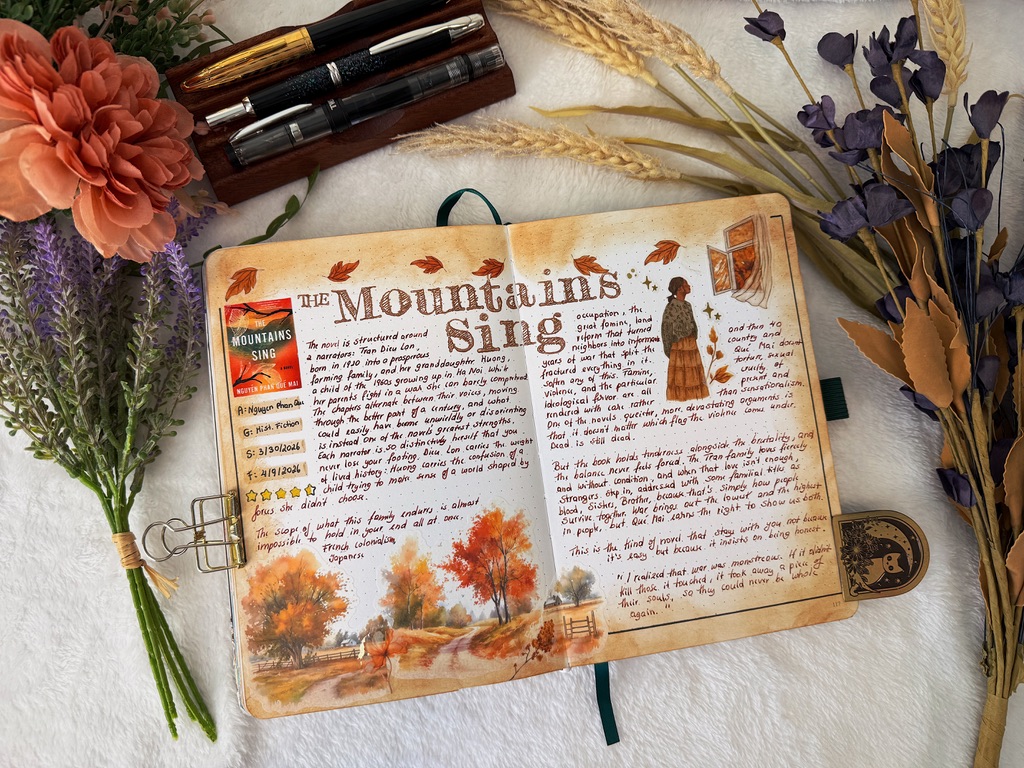
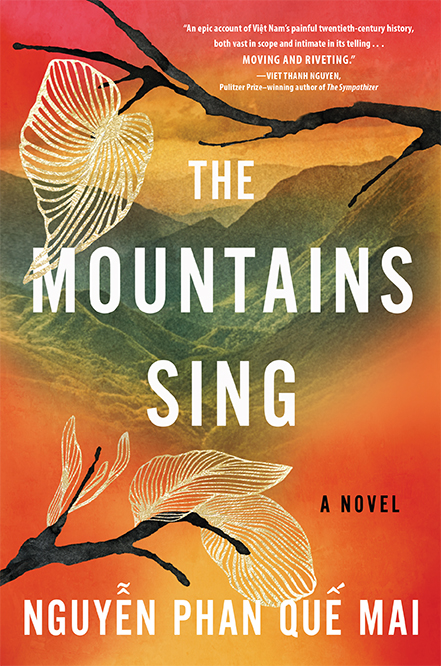
Spanning nearly a century of Vietnamese history, this book follows the Trần family across two alternating timelines: grandmother Trần Diệu Lan, whose life is shaped by French colonialism, Japanese occupation, famine, and land reform, and her granddaughter Hương, coming of age in wartime Hà Nội during the 1970s. Through their intertwined voices, Nguyễn Phan Quế Mai traces how war, ideology, and survival fracture and sustain a family across generations, refusing to look away from brutality while never losing sight of love.
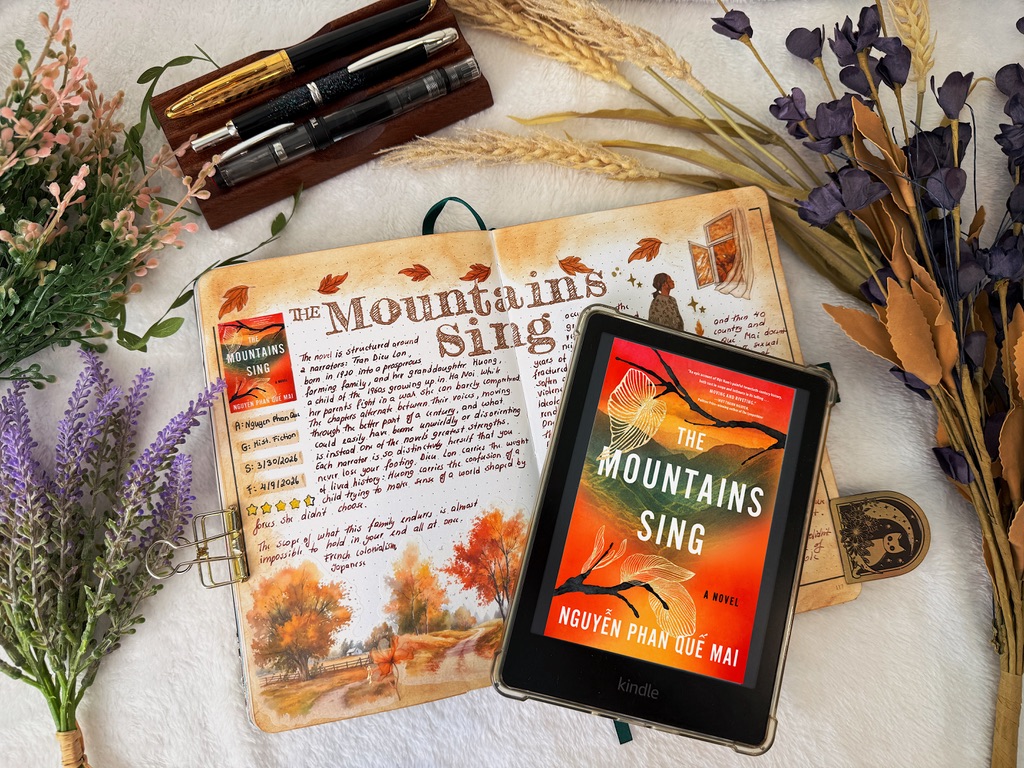
My Review
Nguyễn Phan Quế Mai structures her debut novel around two narrators: Trần Diệu Lan, born in 1920 into a prosperous farming family, and her granddaughter Hương, a child of the 1960s growing up in Hà Nội while her parents fight in a war she can barely comprehend. The chapters alternate between their voices, moving through the better part of a century, and what could easily have become unwieldy or disorienting is instead one of the novel’s greatest strengths. Each narrator is so distinctly herself that you never lose your footing. Diệu Lan carries the weight of lived history; Hương carries the confusion of a child trying to make sense of a world shaped by forces she didn’t choose.
The scope of what this family endures is almost impossible to hold in your head all at once. French colonialism, Japanese occupation, the great famine, land reform that turned neighbors into informants, and then forty years of war that split the country and fractured everything in it. Quế Mai doesn’t soften any of this. Famine, torture, sexual violence, and the particular cruelty of ideological fervor are all present and rendered with care rather than sensationalism. One of the novel’s quieter, more devastating arguments is that it doesn’t matter which flag the violence comes under. Dead is still dead.
I realized that war was monstrous. If it didn’t kill those it touched, it took away a piece of their souls, so they could never be whole again.
But the book holds tenderness alongside the brutality, and the balance never feels forced. The Trần family loves fiercely and without condition, and when that love isn’t enough, strangers step in, addressed with the same familial titles as blood, Sister, Brother, because that’s simply how people survive together. War brings out the lowest and the highest in people, and Quế Mai earns the right to show us both.
What my uncle said made me think. I had resented America, too. But by reading their books, I saw the other side of them—their humanity. Somehow I was sure that if people were willing to read each other, and see the light of other cultures, there would be no war on earth.
This is the kind of novel that stays with you not because it’s easy but because it insists on being honest. Essential reading for anyone who wants to understand twentieth century Vietnam through something other than the American perspective.
Human lives were short and fragile. Time and illnesses consumed us, like flames burning away these pieces of wood. But it didn’t matter how long or short we lived. It mattered more how much light we were able to shed on those we loved and how many people we touched with our compassion.